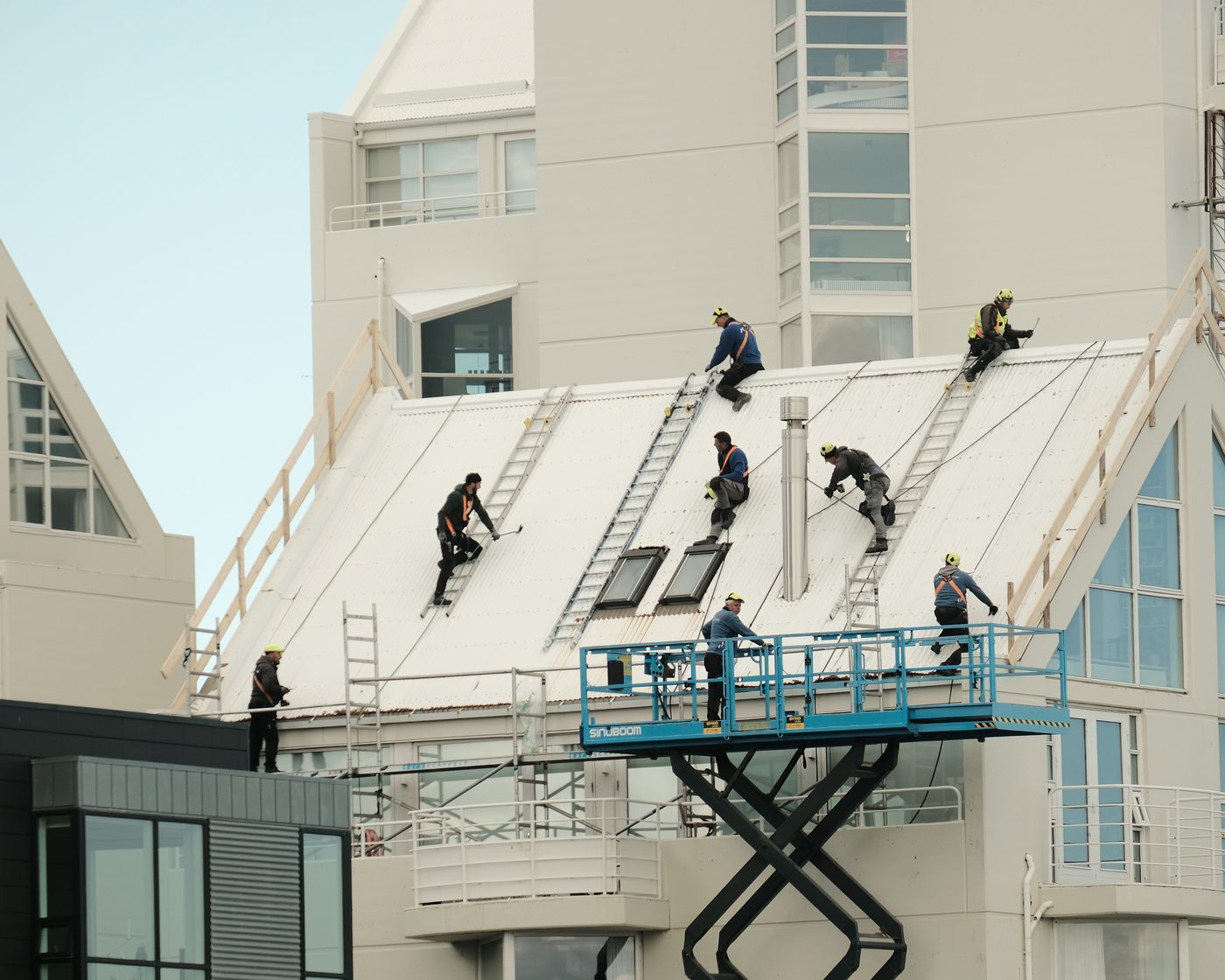
What you get before any work is priced
The first deliverable is a scope, not a number. It names the roof areas in question, the system already on the building, the condition we found, and the work we propose in the order we would do it. Where something could not be established from the surface, it says so and says what it would take to establish it.
That document is worth more than the price attached to it. It is what lets you send the same job to another contractor and get a number you can actually compare, and it is what stops the job growing quietly once the crew is on site. Three bids on three different scopes is not a comparison. It is a list, and the cheapest item on it is simply the one that assumed the least.
What we will not do
We will not quote a roof we have not stood on. A price per square foot given over the phone is a guess, and the guess moves the moment the first layer comes up.
We will not coat over wet insulation. A coating renews a surface, and sealing water inside an assembly hides the damage rather than stopping it. Where a survey shows the insulation is wet, we will say that a coating is the wrong purchase even though it is the cheaper quote in front of you.
We will not open the assembly without asking first. Cores make holes and the patching is part of the job, so we explain what a core would answer and let you decide whether the question is worth it.
When people call
Most calls come at one of four moments. Water has appeared inside and somebody needs it stopped. A budget cycle has arrived and a capital line needs defending with something better than an opinion. A building is changing hands and the roof has to be characterised. Or a warranty requires documented maintenance that nobody has been doing.
The first of those is the most expensive place to begin, because by the time water reaches a ceiling tile it has usually been in the assembly a while and travelled some distance from where it entered. The repair is then larger than the defect that caused it. The other three all leave room to test, compare and choose, which is where the money is saved.
Common questions
Can one contractor handle repair, maintenance and replacement?
Most commercial roofing firms do all three, and keeping the work in one place has a real argument behind it.
- A contractor who knows the roof knows where it has been opened before
- One party is accountable when a repair does not hold
- A firm that mainly sells replacements will tend to find replacements
- Ask for photographs and what a repair is expected to buy in time
- On a large decision, a second opinion from someone with nothing to sell is cheap
What you should not do is spread the work so thin that nobody holds the record. A roof maintained by whoever answered the phone that month has no history, and the next person starts from nothing.
What do you need from me before you can quote the work?
The address, roughly how big the roof is, roughly how old it is, and what is happening now. Everything else is helpful rather than required.
- Drawings, the last closeout package, previous reports and warranty paperwork save guesswork
- Access matters: fixed ladder and hatch or a lift, and who holds the key
- Hours matter, because tenants, guests or production set when work is possible
- Occupied buildings shape the price as much as the materials do
If you have none of this, say so rather than estimating. A wrong roof area or a guessed system produces a quote that has to be revised once someone stands on the roof, so the honest answer is a survey first and a price second.
How do I tell whether work I have been quoted is actually needed?
Ask what the recommendation is based on and expect to be shown it: a photograph, a location on the roof, and what happens if it is left.
- Without those three, the recommendation is an opinion rather than a finding
- Ask what changes if the work waits until next year
- A good answer ranks items by consequence and says plainly what can wait
- A moisture survey shows how much insulation is wet and where
- Core samples establish the layer count and the condition of the deck
Both are inexpensive against a replacement and can turn a full tear off into a partial one. Anyone recommending replacement without either has not looked at the part of the roof that decides it.
Will you work on a roof another contractor installed?
Yes. Most commercial roofing work is on roofs somebody else built.
- Send the original paperwork, because the system and the details decide the repair
- Matching materials matters on single ply, where the wrong membrane will not weld
- A running manufacturer warranty can be affected by repairs from an unapproved firm
- Read the warranty for who may work up there and what must be notified
- If the warranty expired or was never registered, the question disappears
We do not spend the visit criticizing the previous contractor. What was built is what we have to work with, and the useful output is a record of the roof as it stands now.
What is usually left out of a commercial roofing scope?
The items nobody can quantify in advance and the items that belong to another trade.
- Deck replacement and wet insulation are invisible until the roof comes off
- Disconnecting and resetting rooftop equipment is a mechanical contractor's work
- Interior repairs are almost never included: the roofer stops the water
- Permits, fees and jurisdiction inspections may or may not sit inside the price
- Skylights, gutters, fall protection anchors and lightning protection each get missed
Ask for the exclusions in writing rather than inferring them from silence. The useful scope names what is in, names what is out, and gives a rate for the unknowns so finding them does not reopen the price.