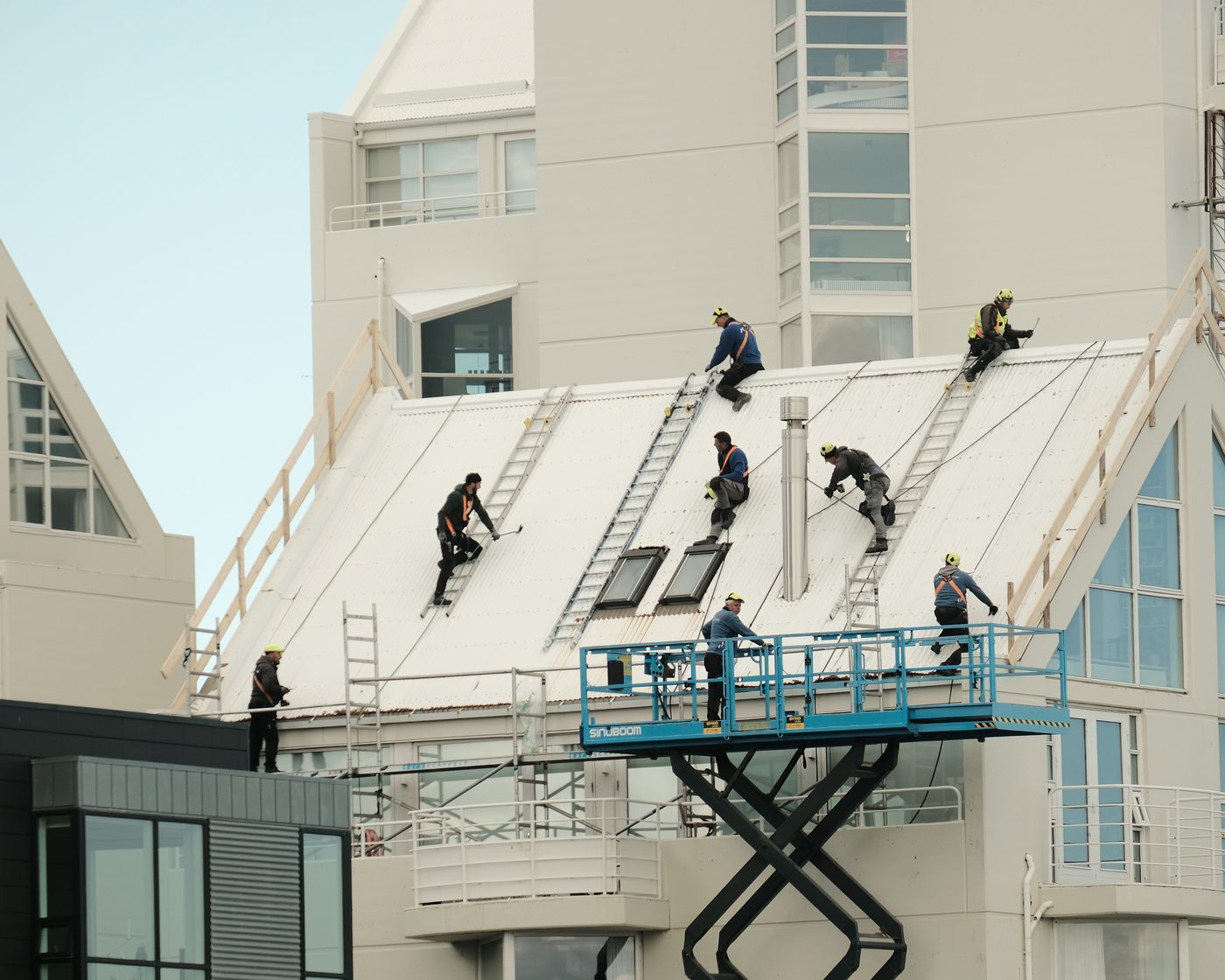
A roof replacement timeline has two halves that are rarely discussed together. There is the work on the roof, which is set by area, crew size and what the tear off finds. And there is everything before it: survey, specification, bidding, award, submittals, permits and material lead time. On a straightforward building the second half is usually the longer one.
It matters because the disruption an owner is budgeting for is the days on the roof, while the date the roof stops leaking is set by the whole sequence. Approving a bid in March does not mean a crew in April, and the gap is where most of the frustration on a reroof actually sits.
The sequence, start to finish
- Condition survey and moisture testing, which establishes how much of the assembly is staying
- Specification, either from a consultant or from the contractor where there is no independent design
- Bidding and award, with the assemblies compared layer by layer rather than on price alone
- Submittals: product data, assembly approvals and warranty documents, reviewed and returned
- Permits, and any structural review the authority asks for
- Material procurement, which is where insulation and specialty items set the pace
- Mobilisation: access, craneage, loading areas, tenant notices, protection below
- Tear off and reinstatement, phased in areas that can be made watertight the same day
- Deck and structural repairs as they are uncovered
- Details, edge metal, penetrations and terminations, which take longer per square foot than the field
- Inspection, punch list and the manufacturer’s field review
- Closeout: warranty registration, as built records and the first maintenance visit
Stages one and two are the ones owners most often compress, and compressing them is what produces change orders later. The roof replacement readiness checklist covers what should be settled before a building goes out to bid.
What sets the time on the roof
| Driver | Effect on the programme |
|---|---|
| Area and crew size | Sets the baseline production rate in squares per day |
| Tear off against recover | A strip adds removal, disposal and exposure to each day |
| Number of details | Curbs, drains, units and penetrations slow a crew more than area |
| Access and loading | A single hoist point or a restricted yard throttles everything |
| Occupancy restrictions | Reduced hours, no night work, limited noise windows |
| Found conditions | Wet insulation and deck damage add scope mid job |
| Weather | Lost days, plus temperature limits on adhesives and welding |
Whether the old roof comes off at all is the largest single variable, which is why recover against tear off is decided before a programme means anything.
Phasing on a building that stays open
A live building is reroofed in areas rather than all at once, and the size of each area is decided by how much can be opened and made watertight the same day. That single rule drives most of what the tenants notice. It sets how long the work is next to any one suite, how often the crew moves its loading point, and how much temporary protection is needed inside.
Three things are worth agreeing before the first area is opened. Which hours the noisy stages can run, because tear off and mechanical fastening carry through a structure far better than anybody expects. What happens to air intakes during adhesive and hot work, since fumes drawn into a building stop a job faster than rain. And who is called if water does find its way in, with the response and the responsibility written down rather than assumed.
Phasing lengthens the time on site and shortens the disruption, and that trade is the owner’s to make rather than the contractor’s. Say which one you are optimising for before the programme is drawn, not after.
Reading the programme you are given
- Ask for the daily production rate and the crew size behind the total
- Ask which materials are long lead and when they will be ordered
- Ask what the plan is for each day’s open edge and who calls the weather
- Ask what happens to the programme if the deck needs repair, and how that is priced
- Ask when the manufacturer’s field review happens, since the warranty depends on it
- Ask what closeout includes, and what is still outstanding on the day the crew leaves
Where to go next
If the scope is not settled yet, the replacement page covers what decides between repair, recover and a full strip. If the bids are already in and the programmes differ, commercial roof installation sets out what each stage on the roof involves, which is how you tell a short programme from an optimistic one.
Common questions
How far ahead should a roof replacement be planned?
Far enough that the survey, the specification and the material order all happen before the weather window you want to build in. The work on the roof can be quoted in days, but the stages in front of it are measured in weeks and none of them can be compressed usefully.
- Survey and moisture testing come before any specification
- Submittals and permits sit between award and mobilisation
- Long lead materials should be ordered at award
- Tenant notice periods are fixed and cannot be shortened
- The days on the roof are not the project duration
Work backwards from the season you want the membrane to go on, and treat the survey as the first dated item rather than a formality. A building that starts the process at the beginning of a dry season is usually bidding into the busiest part of the year with no time left for approvals. The owners who get the programme they wanted are the ones who commissioned the survey a season early, which also means the moisture results are in the specification instead of arriving as a change order.
Can a building stay occupied during a roof replacement?
Usually yes, and most commercial replacements are done over a working building. What changes is the sequence: the roof is opened in sections small enough to be made watertight the same day, and the noisiest work is planned around whatever the tenants cannot tolerate.
- Work is phased so no area is left open overnight
- Fastening and tear off are the noise and vibration problems
- Odour from adhesives and hot work affects air intakes
- Internal protection is needed below the work area
- Deliveries and craneage need agreed times and routes
Get the tenant conversations done before the programme is fixed rather than after. A medical suite, a kitchen, a data room and a school all have hours they cannot give up, and finding that out in week two turns a phased programme into a stop and start one. Air intakes are the detail most often missed: fumes drawn into a building generate complaints that stop the work faster than rain does, and the fix is to shut or divert them during the relevant stages.
What happens if it rains part way through a tear off?
The roof should already be ready for it. The method statement sets out how much is opened at a time and how each day's edge is temporarily sealed, so a shower means lost production rather than water inside the building. The exposure is the risk being managed.
- Only an area that can be closed the same day is opened
- Temporary water cutoffs seal each day's edge
- Forecasts drive the decision to open a new area
- Materials on the roof have to be protected as well
- Who carries the cost of rain delay is a contract question
Read the method statement with that question in mind before the work starts. It should say how the day's edge is terminated, what is used to do it, and who decides each morning whether to open new area. On an occupied building, agree in advance who is called if water does get in and what the response is, because the argument about responsibility is far easier to have before there is a wet ceiling than afterwards.
What causes most roof replacement delays?
Work that happens before anyone is on the roof. Submittal approval, permits and material lead times account for a large share of slipped start dates, and the common surprise once work begins is deck or insulation damage that was not in the original scope.
- Submittals and approvals sit between award and mobilisation
- Permits depend on the local authority, not on the roofer
- Insulation and specialty materials can carry long lead times
- Wet insulation found during tear off adds scope
- Deck repairs may need another trade and another inspection
Two of these can be removed from the critical path by doing the work earlier. A moisture survey before the specification is written converts the biggest surprise into a priced line item, and ordering long lead materials at award rather than after the last submittal is approved shortens the gap before mobilisation. Ask which items are long lead and when they will be ordered. The answer tells you whether the start date is a plan or a hope.
Is there a best time of year to replace a commercial roof?
The best window is the one with settled weather and temperatures inside the range the installation method needs. Adhesives, welding and self adhered sheets all have limits, and a roof installed outside them can be compliant on paper and poor in practice.
- Each system has a temperature range for installation
- Settled weather reduces the exposure during tear off
- Peak season affects crew availability and pricing
- Winter work is possible with the right system and method
- Waiting a season has a cost if the roof is already leaking
Balance the installation conditions against the condition of the existing roof. Deferring a replacement through a wet season to get better weather makes sense on a roof that is merely old, and makes none on a roof that is already wetting the insulation every time it rains, because the scope grows while you wait. Where the timing is genuinely tight, ask what interim repairs would hold the roof through the season and what they cost against the extra scope they prevent.