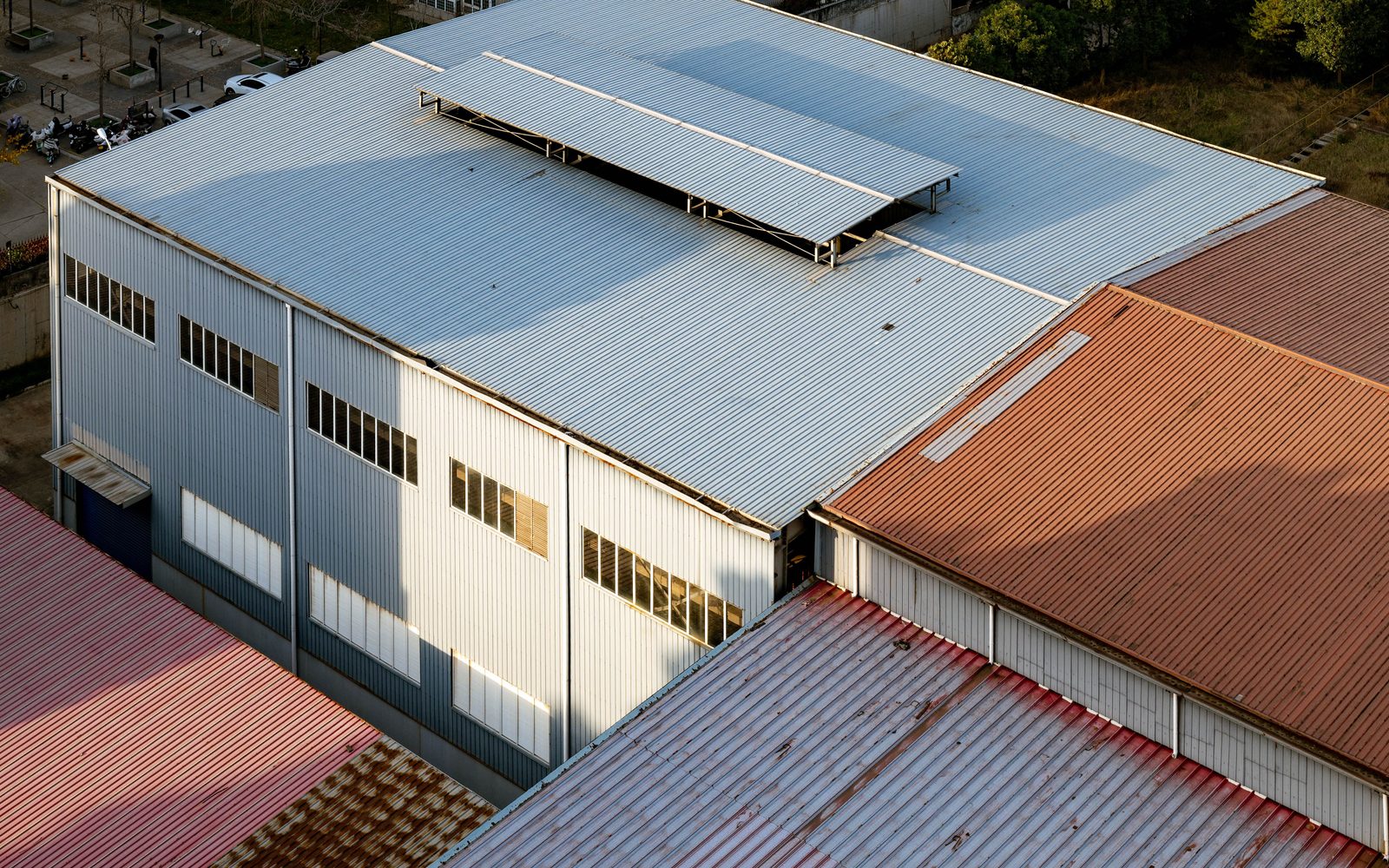
A commercial metal roofing contractor installs and repairs panel roofs: standing seam, exposed fastener, and the flashings that tie them into the rest of the building. The work is sheet metal craft rather than membrane work, and that single fact decides most of what you should be checking. A firm that is excellent at welded single ply roofs may be merely adequate on metal, and the failures that follow look like bad luck for about five years.
Metal roofs fail in predictable places and almost never in the middle of a panel. They fail at the fixings, at the end laps, at the penetrations and where the roof meets a wall. Every one of those is a workmanship item. So the question to put to a contractor is not whether they can fit panels. It is whether they understand that the roof has to be allowed to move, and can describe how they will let it.
What a metal roof actually asks of the installer
| Requirement | Why it matters | What to ask |
|---|---|---|
| Thermal movement | Panels grow and shrink with temperature all year | How is movement allowed at the ridge, the eave and each penetration |
| Fastener discipline | A fixing in the wrong place leaks or pulls out under wind | What spacing is used in the field, at perimeters and at corners |
| Sheet metal fabrication | Most flashings are made, not bought | Are flashings formed on site, and by whom |
| Galvanic compatibility | Dissimilar metals in contact corrode | What material are the fasteners, clips and flashings |
| Drainage geometry | Water is shed by slope and lap, not by sealant | How are end laps and valleys handled on this roof |
If a contractor answers all five without reaching for a brochure, you are talking to somebody who does this work. What commercial metal roofing is covers the systems themselves if you are still choosing between them.
The three firms that bid metal work, and what each is
The metal specialist. Panel roofs are most of what it does. It owns or hires a forming machine, fabricates its own flashings and has crews who seam for a living. Usually the right answer on a standing seam reroof.
The full service commercial roofer. Membranes are its core and metal is a line of business. Perfectly capable on exposed fastener work and on simple geometry. Worth probing hard on complex standing seam details and on who exactly will be on the roof.
The metal building supplier or erector. Strong on new construction to its own drawings, because the structure and the roof were designed together. On an existing building it is working with somebody else’s purlins and somebody else’s penetrations, which is a different job. See our page on commercial roofing companies for how firm size changes what you get.
The retrofit question nobody asks early enough
On a reroof, the decision that moves the price most is whether the new panels go over the existing roof or the existing roof comes off. That turns on the condition of the substructure, how many layers are already there, what local code allows and whether the deck is dry.
A contractor should want to establish that before quoting, and establishing it means going up and looking, measuring slopes, confirming purlin spacing and condition, and checking whether existing fixings still hold. Recover against tear off sets out the trade off. A quote produced without that survey is a number with an assumption hidden inside it, and the assumption will surface as a variation.
Reading a metal roofing bid
The specification is where the money is. Ask for these items in writing, and compare them line against line rather than comparing totals:
- Panel. Profile, metal, gauge, coating system and finish warranty. A thinner gauge in the same profile is a different roof.
- Attachment. Clip type, whether it floats, fastener type and material, substrate it fixes into, and spacing by zone.
- Flashings. Which are formed on site, which are manufacturer items, and what gauge each is.
- Underlayment. Type, and whether a high temperature product is used where the panel runs hot.
- Thermal separation. Where the assembly needs a thermal block or added insulation, and what is included. Metal roof insulation explains what is being solved.
- Penetrations. Each one listed, with how it will be flashed. Sealant alone is not a detail.
- Warranties. The manufacturer’s, the contractor’s workmanship cover, and what each excludes.
Two bids that differ by a quarter usually differ on gauge, on coating, on clip count or on how many flashings are being fabricated rather than approximated. Our bid comparison checklist lays the lines side by side.
Oil canning, and the conversation to have before signing
Oil canning is the slight waviness visible in the flat part of a metal panel at a shallow viewing angle. It is inherent to formed sheet, it is a cosmetic matter rather than a performance one, and almost every manufacturer excludes it from warranty. It is also the single most common source of argument at handover on a visible roof.
The way to avoid that argument is to raise it first. Ask the contractor what reduces it on this building: a heavier gauge, a striated or pencil ribbed panel, a narrower panel width, tension levelled stock, and careful handling on site all help. Then agree in writing what will be judged acceptable and from where it will be viewed. A contractor who tells you plainly that some will be visible is being straight with you. One who promises none is setting up a dispute.
Checks that are quick and tell you a lot
- Insurance and licensing, verified at source. Liability cover, workers compensation and any state licence, confirmed with the issuer rather than from a document emailed to you.
- Manufacturer approval for the exact system. Approval is system specific, and an approval for one profile is not an approval for another.
- Three panel roofs of similar geometry, which you visit. Stand at a wall junction and look at the flashing. Craft is visible.
- The crew, not the company. Ask who leads the crew on your building and how many of these roofs they have run.
- Fall protection and access plan. On a sloped panel roof this is a real plan, not a sentence. A firm that is vague about it is vague about other things.
Our contractor vetting checklist is the same ground in a form you can work through on a call.
What should be in the contract before anybody starts
Fix the scope, the specification and the sequence. Name the party responsible for watertightness at every junction with another trade. Agree who sets rooftop curbs and when, because a curb installed after the panels is a worse detail and a predictable leak. Agree how daily weather protection works on an open deck, who inspects before the warranty starts and what triggers a payment. And agree the variation procedure in writing, since the variations are where a low bid becomes an average one.
Where to go next
If you are still deciding between metal and a membrane, metal roof cost sets out what moves the number and why two bids on one building can differ so widely. If the system is settled and the question is workmanship, standing seam installation describes what a good crew actually does on the roof, which is the clearest way to judge what you are being offered.
Common questions
Do commercial metal roofing contractors need different skills from flat roofers?
Yes. A membrane roof is waterproofed by sealing a continuous sheet. A metal roof is waterproofed by geometry: laps, seams and flashings shed water while the panels expand and contract. The craft is sheet metal work, and it does not transfer from welding.
- Seaming, forming and fabricating replace welding and adhesive
- Panels move with temperature and must be free to
- Most flashings are made rather than bought
- Fastener choice and placement decide the service life
- Slope and lap direction govern where water goes
Ask what proportion of the firm's work is metal. A roofer who does one panel roof a year will carry the right tools and the wrong instincts, and the instinct that causes the most damage is sealing something that was designed to move. Look for a crew that forms its own flashings on site and can describe how it accommodates expansion at the ridge, the eave and every penetration. That answer, given fluently, tells you more than any certificate on the wall.
Should the panels be roll formed on site or delivered to it?
Both are normal and the choice is driven by panel length. Site forming produces continuous panels with no end laps, which removes the joint most likely to leak. Factory panels arrive with a controlled finish but have to be transported, and long ones are easily damaged.
- Site forming avoids end laps on long runs
- Factory forming gives tighter control of the finish
- Transport damage is the main risk with long factory panels
- Site forming needs level ground and space for the machine
- Either way, oil canning is cosmetic and worth discussing early
On a building with long uninterrupted slopes, site forming is usually the better answer, because an end lap in the middle of a run is a detail that depends on sealant rather than on geometry. Ask where the forming machine will stand and how panels will be lifted, because that is a logistics question with a real cost attached. Ask also what the contractor does with offcuts and damaged panels, since a crew that quietly installs a dented panel has told you how the rest will go.
How do I tell a metal building supplier from a metal roofing contractor?
A supplier sells a system and may erect it as part of a new building. A roofing contractor replaces or repairs roofs on buildings that already exist. The second job is harder, because the deck, the purlins and the details are whatever somebody else left behind.
- Suppliers work to their own drawings on new structures
- Roofing contractors work to what the building actually is
- Retrofit needs survey work before anything is ordered
- Purlin spacing and condition govern what can be fixed to
- Existing penetrations rarely sit where a new system wants them
For a reroof, ask what the contractor does before ordering material: measuring every slope, confirming purlin spacing and condition, checking the existing fixings and deciding whether the substructure will carry the new load. A firm that quotes from a satellite image and a phone call has skipped the part that determines whether the panels will fit. For a new building, a supplier erection crew is often the right answer, and the roof detailing is still worth reviewing separately.
What should a metal roofing bid say about the clips and fasteners?
It should name them. Clip type, fastener type, substrate they fix into, coating or material, and spacing, including the closer spacing at the perimeter and the corners. Those items decide whether the roof survives wind and whether it corrodes from the inside out.
- Clip type fixed or floating, with the movement it allows
- Fastener material and coating, matched to the panel
- What the fastener actually penetrates and holds in
- Spacing in the field, at the perimeter and at corners
- Washer type and the torque it is meant to be set to
A bid that says metal roof system to manufacturer specification leaves all of it open, and the cheapest compliant reading is what you will get. Dissimilar metals in contact corrode, so the fastener and the panel have to be compatible rather than merely available. Perimeter and corner zones see higher uplift than the field of the roof, which is why spacing tightens there, and a crew working to one spacing across the whole roof is building a failure into the edge.
What goes wrong when a general contractor subcontracts the metal roof?
Usually the interfaces. The panels are installed competently and the roof leaks where it meets something else: a wall, a curb, a gutter or a parapet built by a different trade on a different day with nobody owning the junction.
- Wall to roof junctions fall between two trades
- Curbs set by the mechanical trade are often in the wrong place
- Gutter and fascia work may be priced to a different scope
- Sequencing errors force sealant where a flashing belonged
- Nobody holds a single warranty across the junction
The fix is contractual rather than technical. Name one party responsible for watertightness across every junction, and have the interfaces drawn before work starts rather than resolved on the roof. Ask who sets the curbs and in what order, because a curb installed after the panels is a different and worse detail than one installed before. Then ask whose warranty covers a leak at the wall line, and get the answer in the contract rather than in the meeting.